Guide · updated September 10, 2026
Headshot poses that actually work
A headshot pose is not a pose. Nobody is doing anything with their arms in a photo that stops at the chest. A headshot pose is five small decisions: where the body points, where the chin sits, what the shoulders do, where the eyes go and what the mouth is doing. Get those five right and the fifteen variations below are just different combinations of them.
Each pose has a photo and a note on who it suits. Corporate and LinkedIn wants the first five. Creative, sales and founders can go further down the list. Actors need their own set and a different guide.
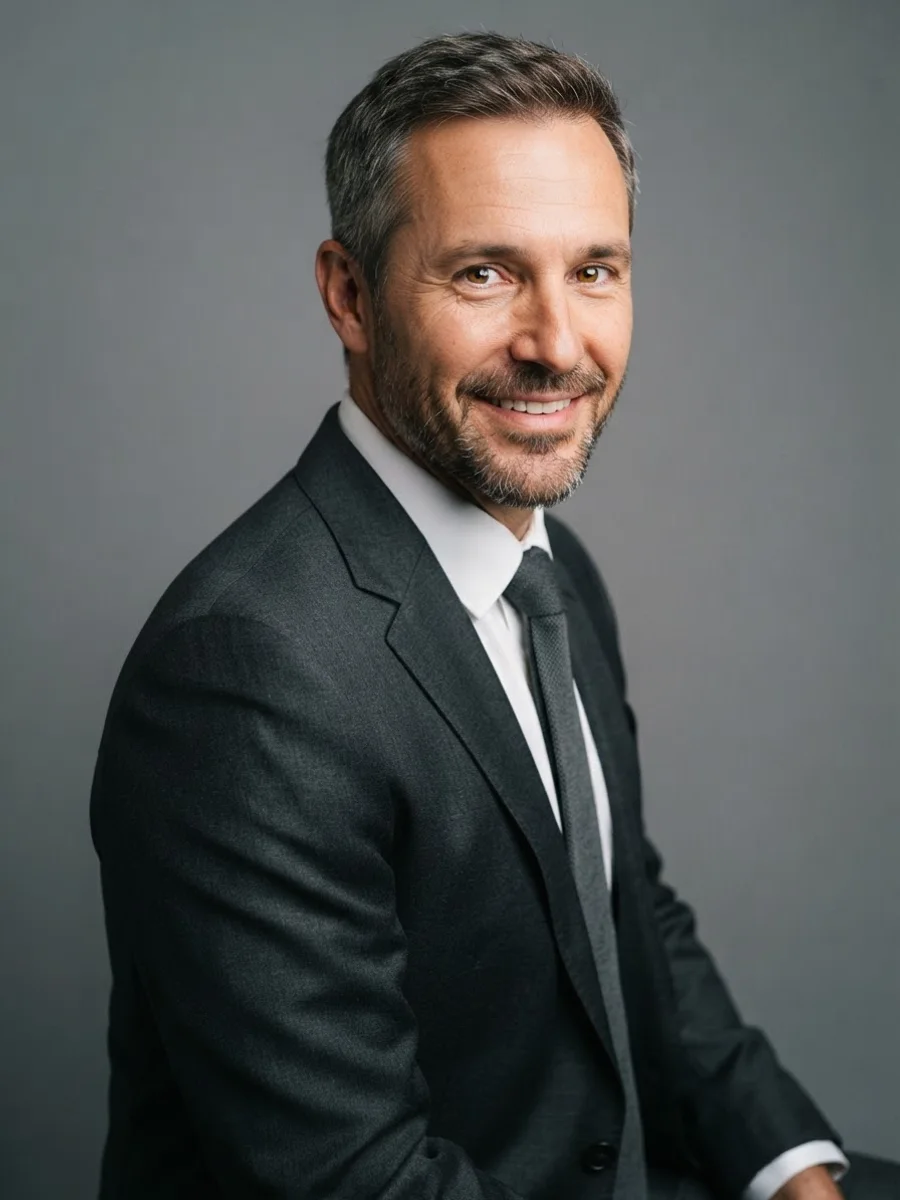
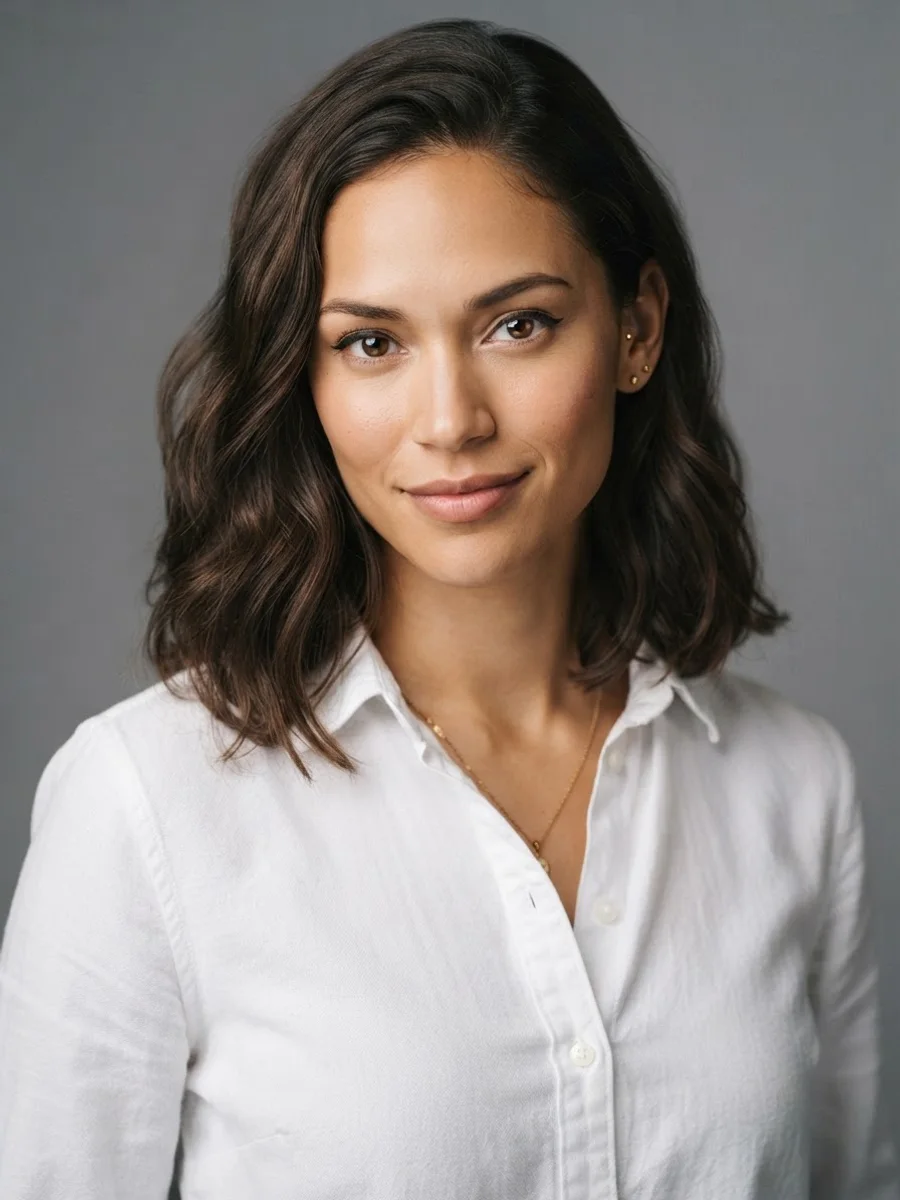
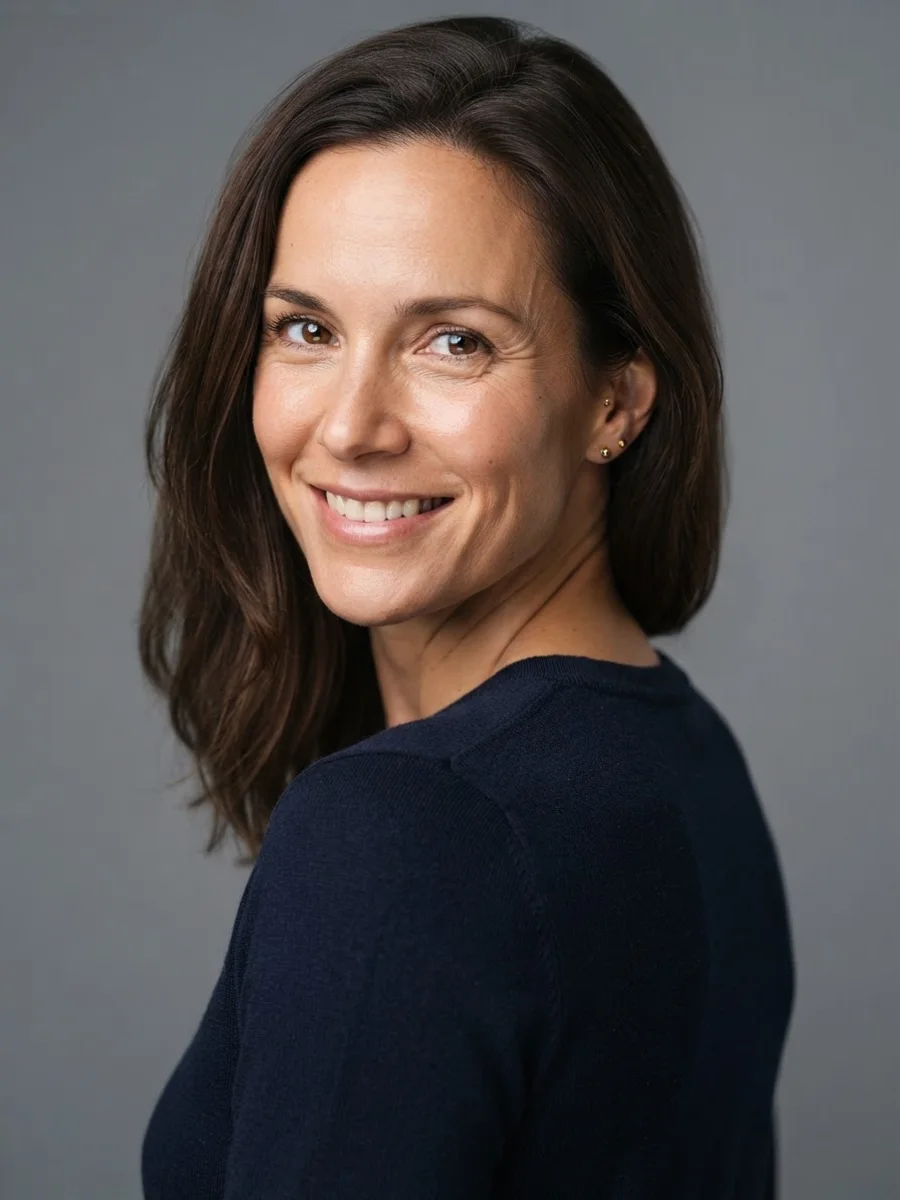
The five rules under every pose
- ·Body off-axis, face on-axis. Turn the shoulders 20 to 45 degrees away from the lens, then bring the face back to it. Square shoulders are for ID cards.
- ·Chin forward and slightly down. Push the chin toward the camera like a turtle, then dip it a few degrees. It feels ridiculous and it defines the jaw in every photo ever taken.
- ·Shoulders down and back, weight on the back foot. Posture is most of what reads as confidence.
- ·Eyes to the lens, or a hair above it. Looking at the screen puts the eyes a few degrees off and the viewer feels it without knowing why.
- ·Expression from the eyes first. Think of something, let the face follow, hold for three seconds, reset. A held smile dies; a fresh one does not.
Everything below assumes those five. When a pose looks off, it is almost always one of them, usually the chin.
Poses 1 to 3: the corporate standards
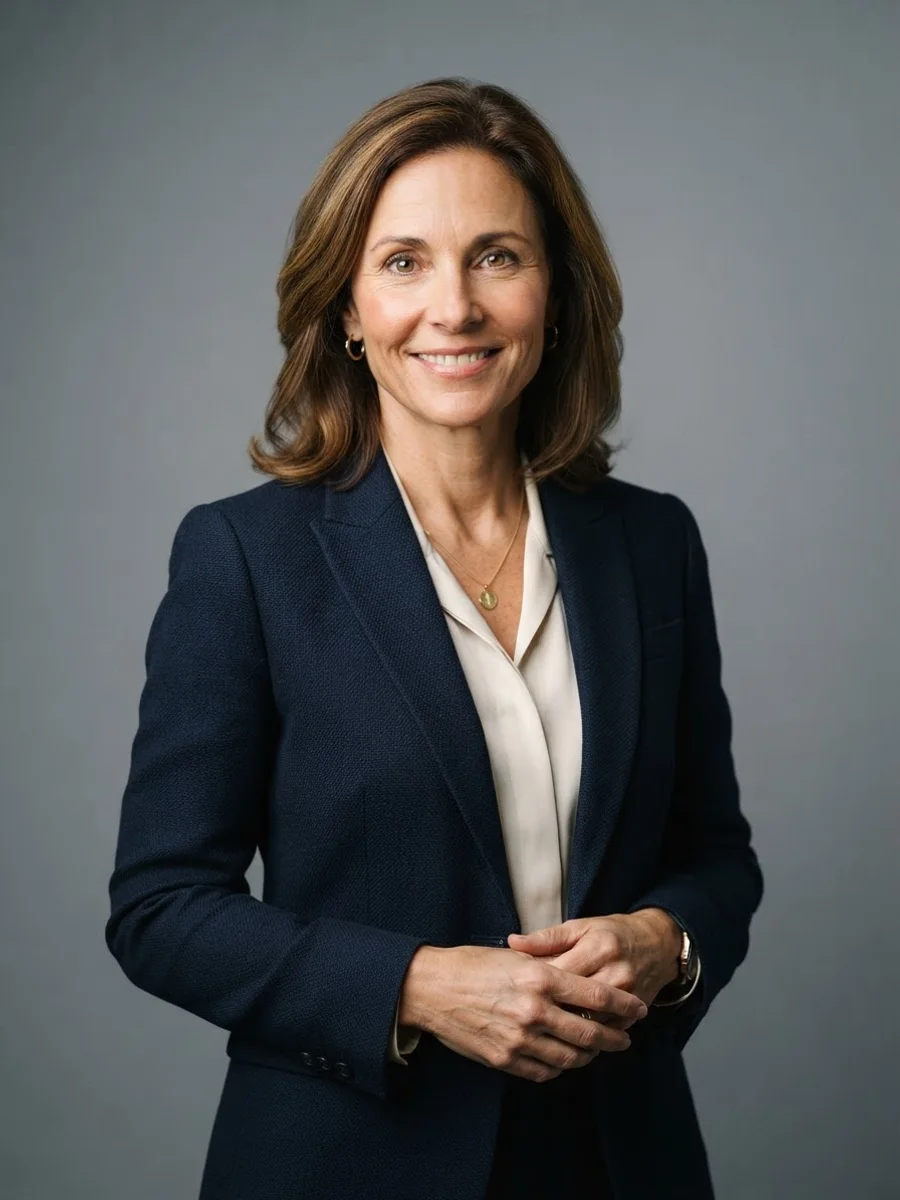
These three account for most of the headshots on LinkedIn and every company page. They are boring on purpose. The photo is supposed to disappear and leave the face.
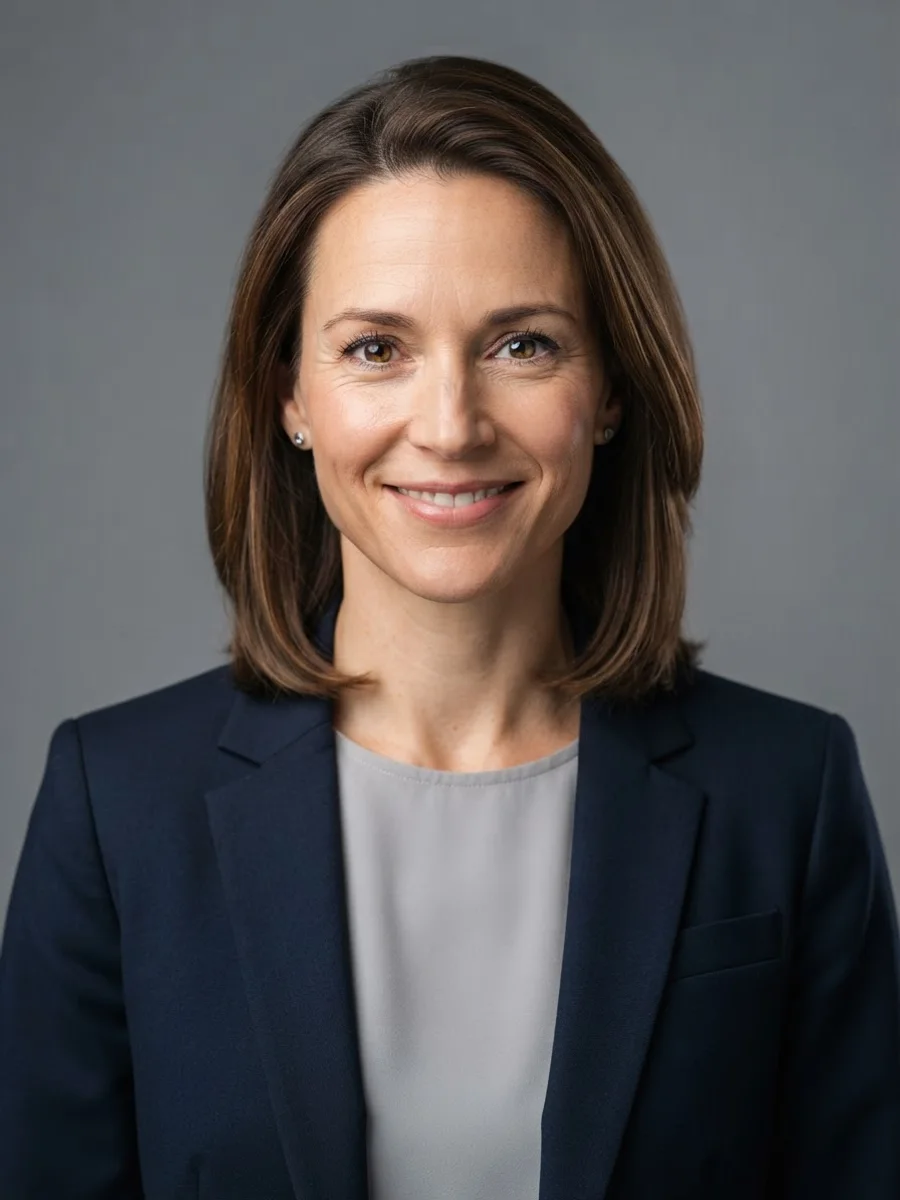
Poses 4 to 6: warmer and more approachable
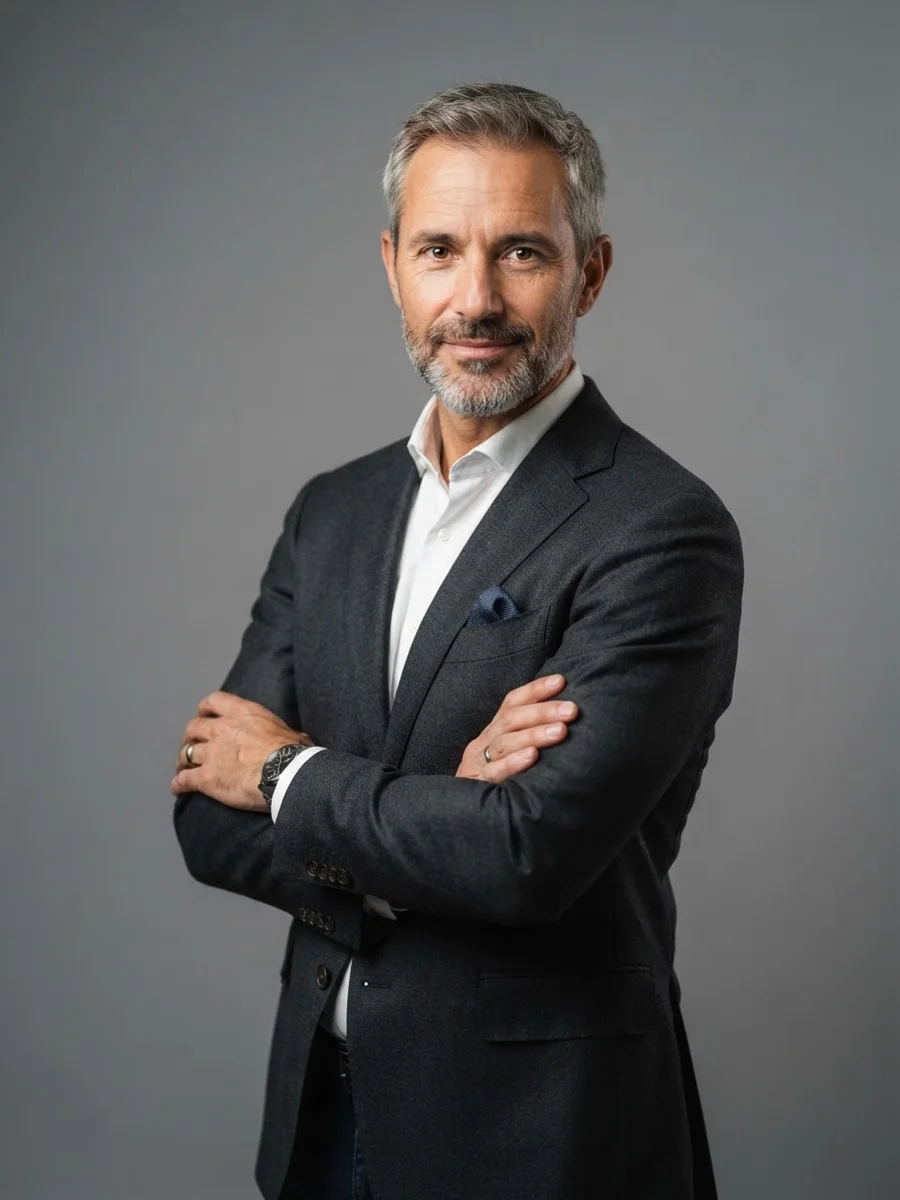
A tilt, a lean or crossed arms add personality without leaving professional territory. These suit client-facing roles: sales, recruiting, coaching, real estate, healthcare.

Poses 7 to 9: movement and seated
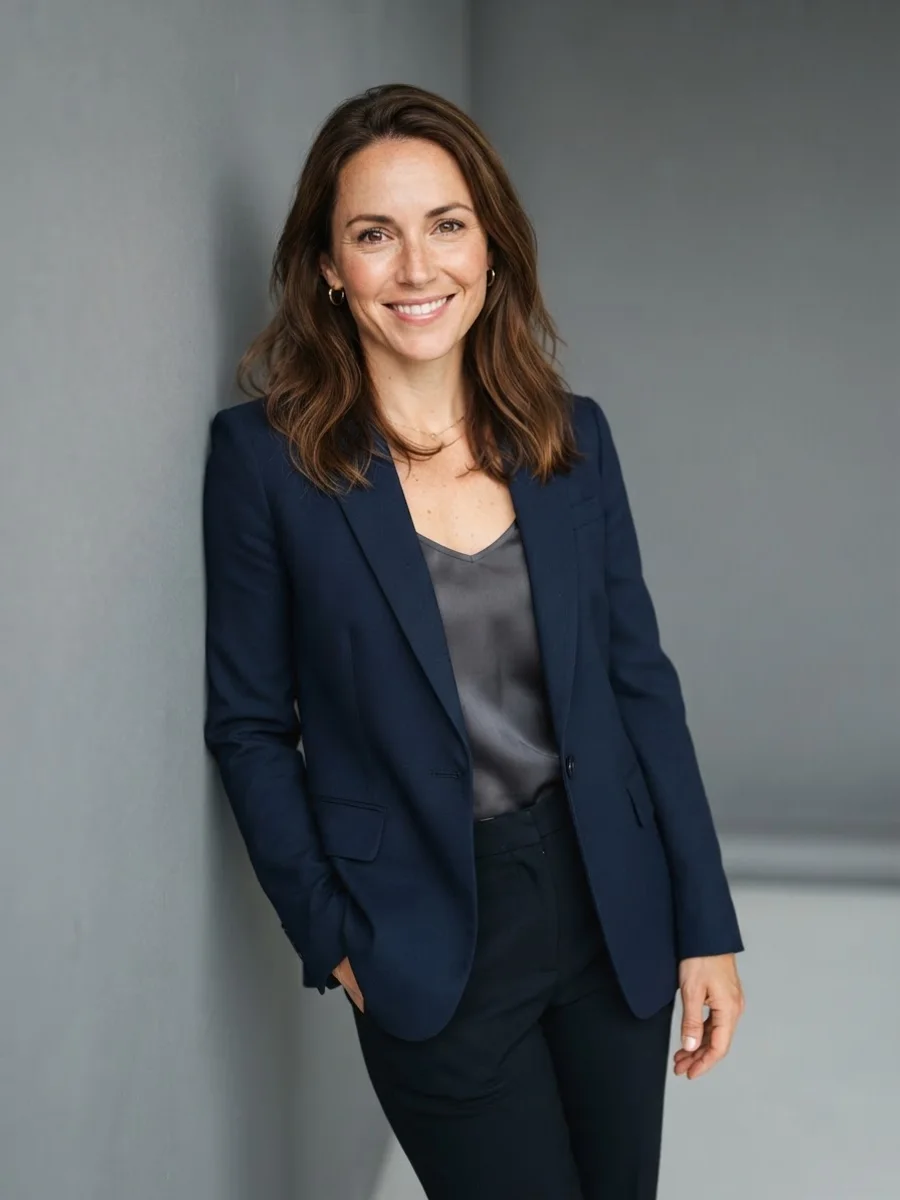
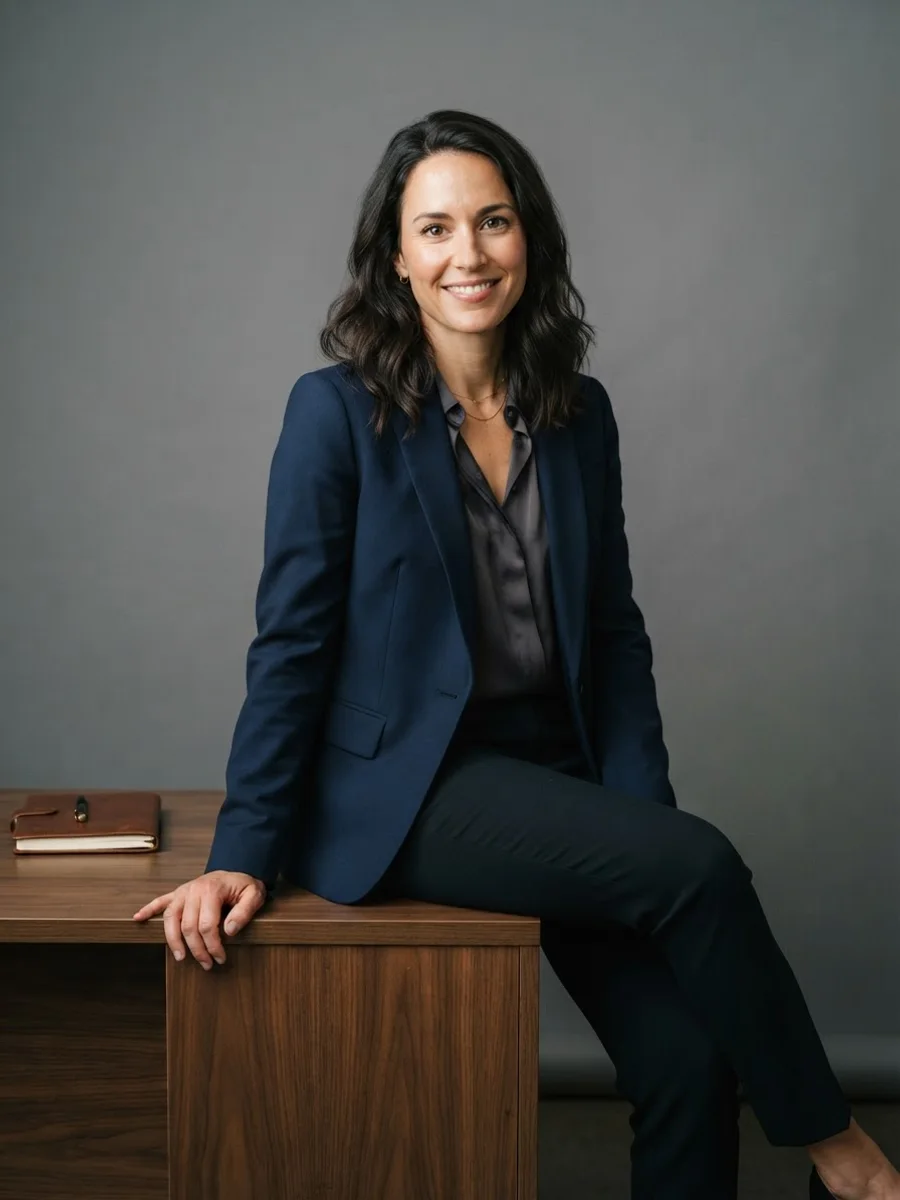
Turning the body further or sitting down changes the energy of the photo. These need a photographer or a well-placed phone, because the framing is wider than a chest-up shot.

Poses 10 to 12: for personality-led brands
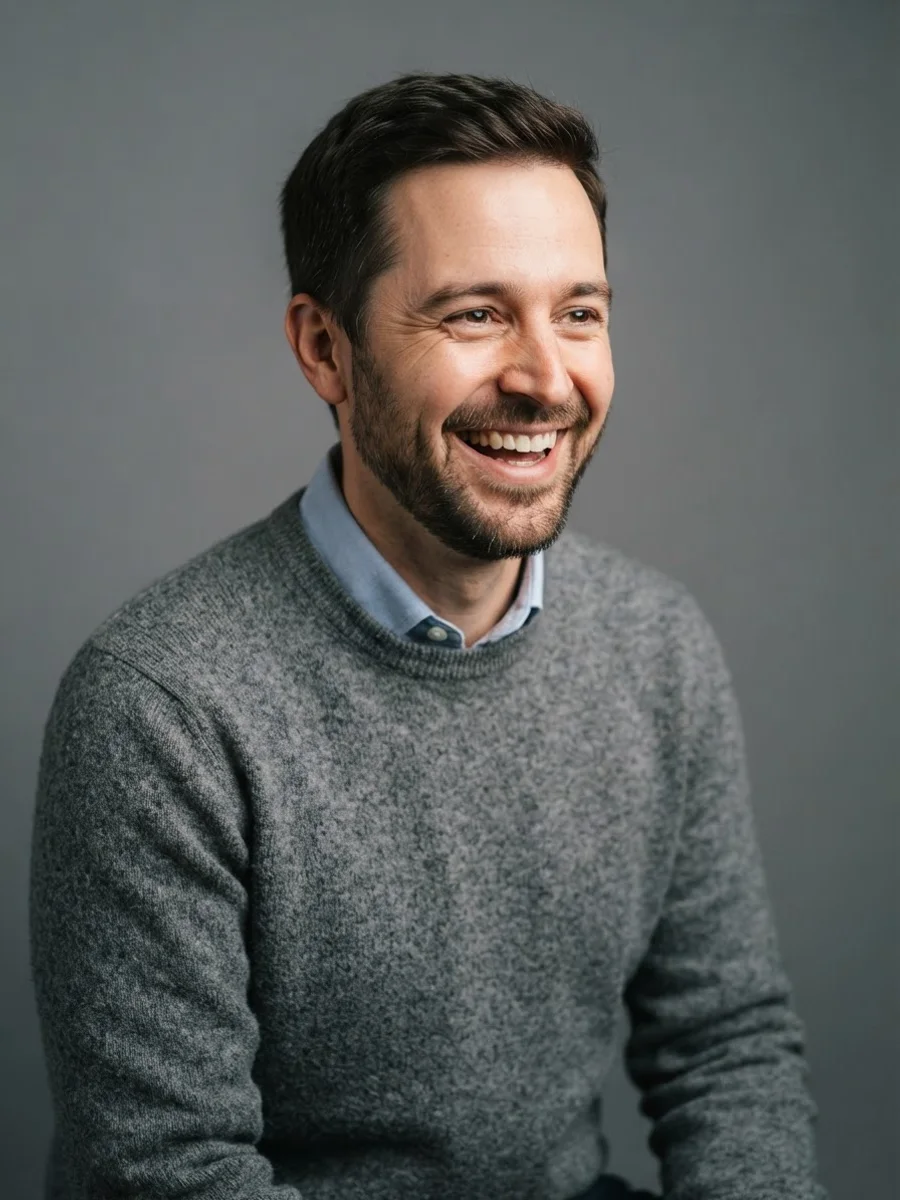
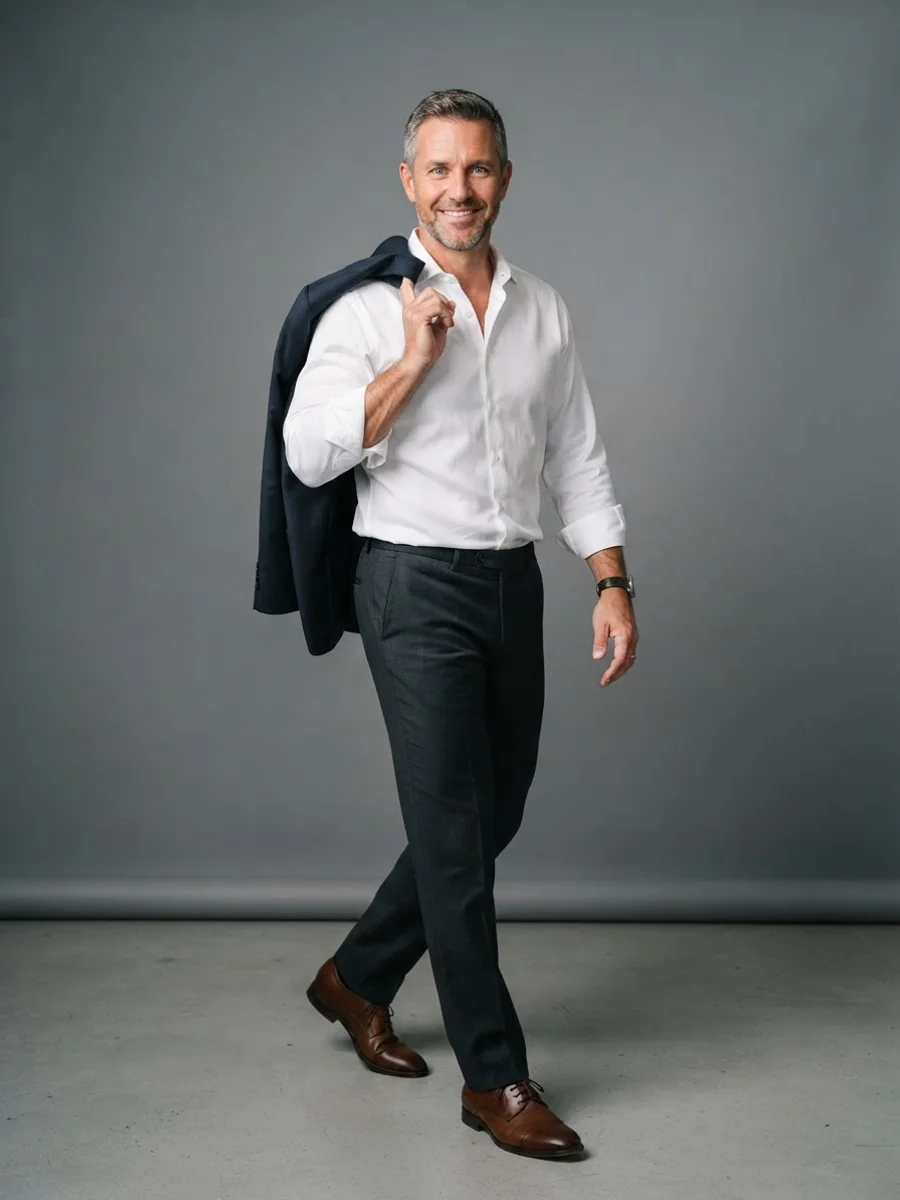
Founders, creators, speakers and salespeople are selling themselves as much as a service, and the headshot can carry more expression. The risk is looking staged; the fix is to actually do the thing, not mime it.
Poses 13 to 15: strong and thoughtful
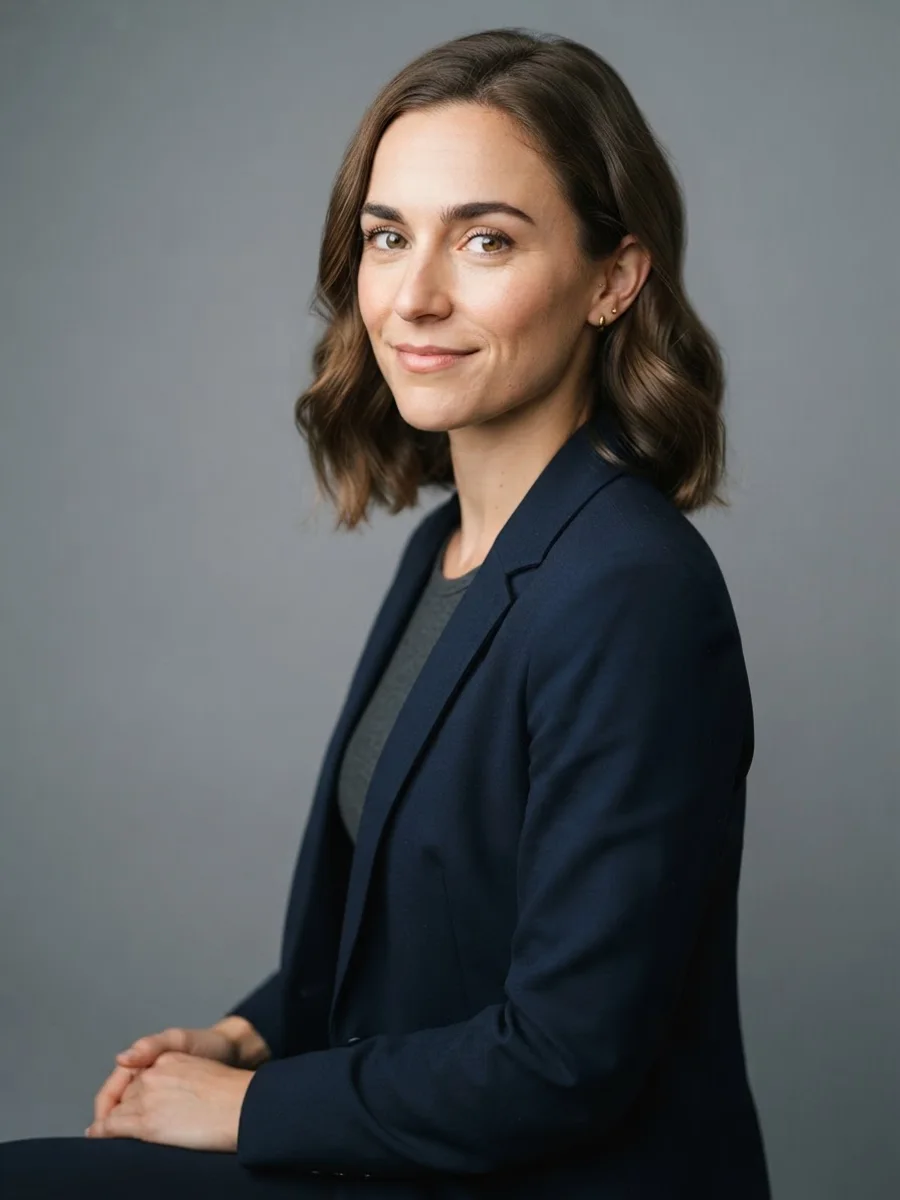
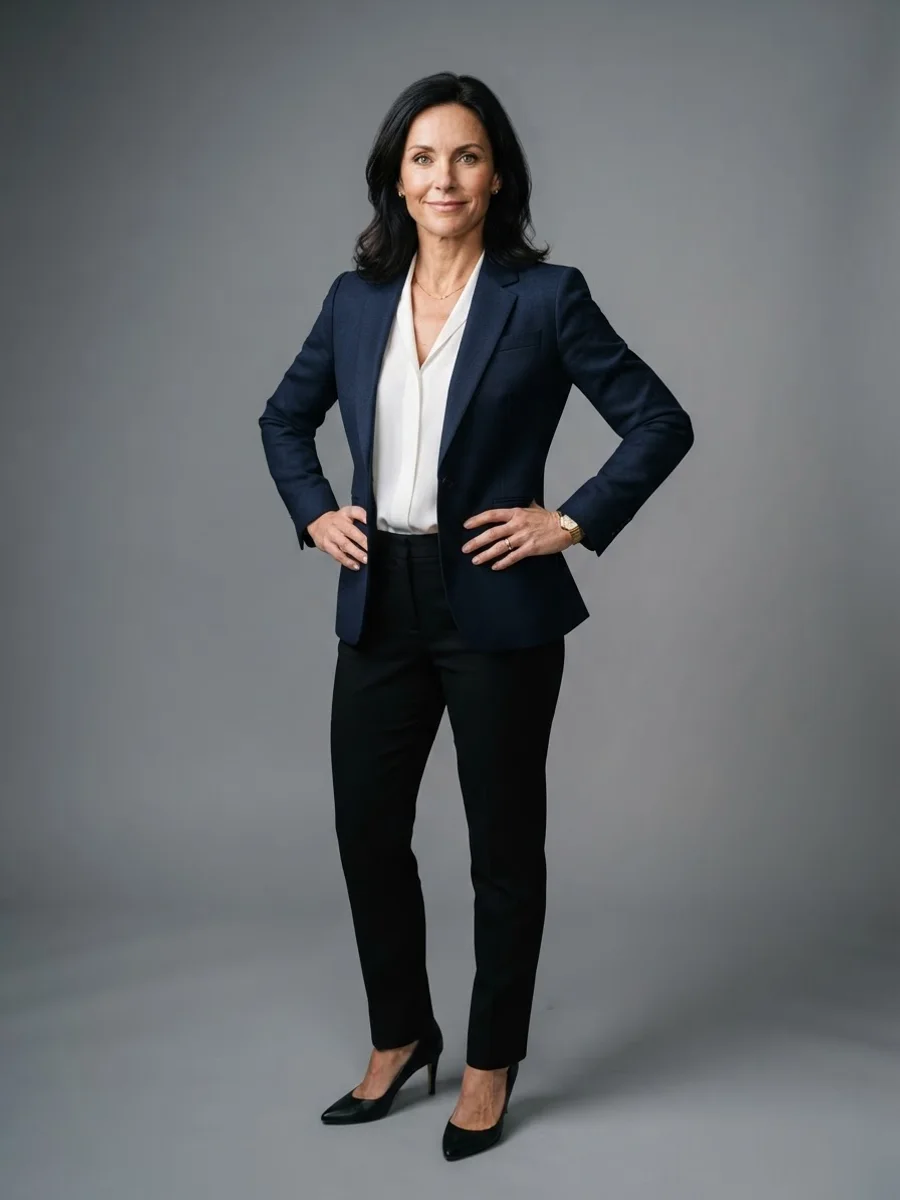
The last three are for people whose photo has to carry authority: senior leadership, academics, specialists. They lean on posture and stillness rather than a smile.
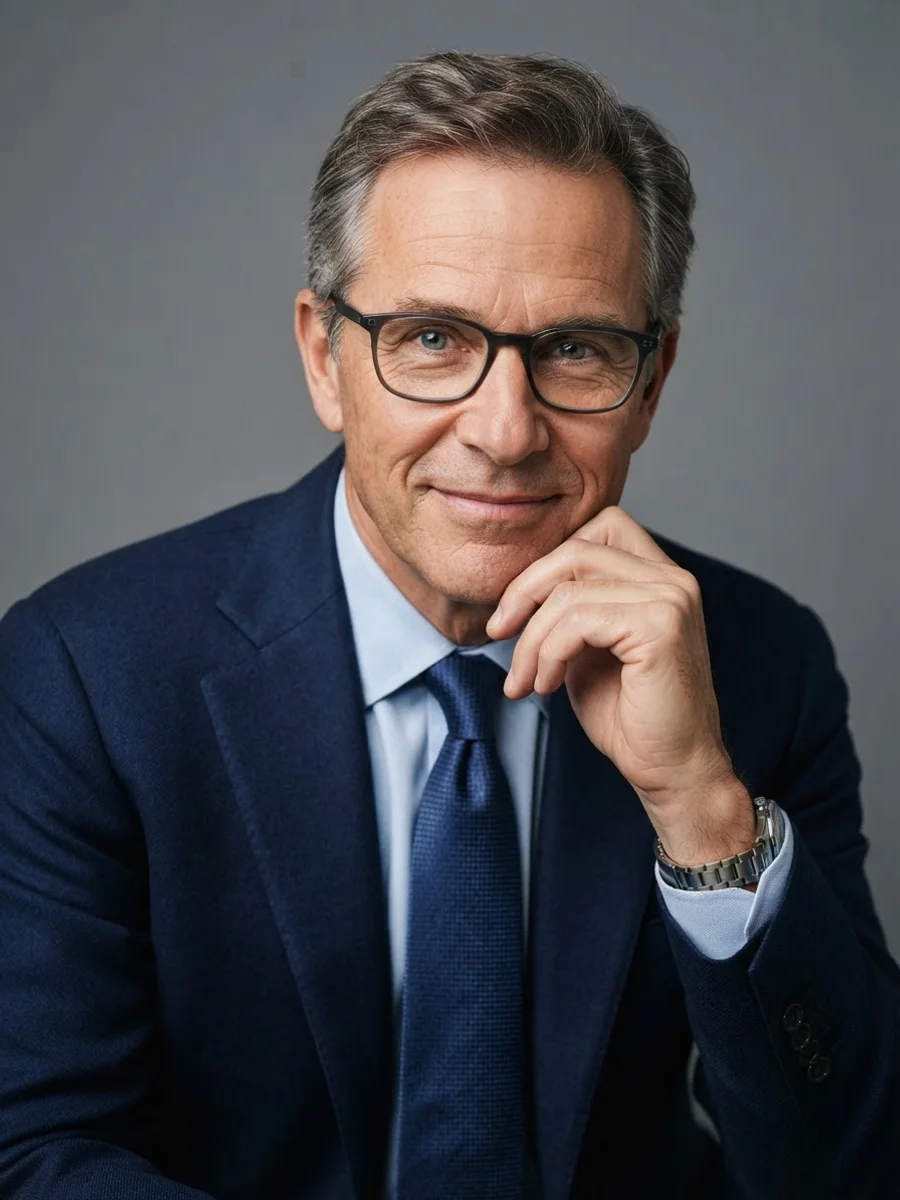
Which pose for which job
| Role | Best poses | Avoid |
|---|---|---|
| LinkedIn, corporate, finance, law | 2, 3, 1, 9 | 7, 12, 14 |
| Sales, recruiting, real estate | 4, 2, 12, 11 | 13, 15 |
| Healthcare, therapy, coaching | 4, 8, 2 | 14, 12 |
| Founders, startups, agencies | 5, 11, 14, 10 | 1 |
| Executives, board members | 3, 9, 14, 15 | 10, 12 |
| Creative, design, architecture | 7, 13, 6 | 1, 9 |
| Speakers, authors, creators | 10, 15, 12 | 1 |
| Academics, researchers | 15, 13, 2 | 12, 14 |
If a role is not on the list, use pose 2. It has never been the wrong answer.
Headshot poses for women
Every pose above works for women; the ones that get asked about most are the head tilt (4), over the shoulder (7) and hands on hips (14), because they are the ones where the advice for men and women diverges. The tilt is read as friendlier on women and as uncertain on men, so women can use it in formal industries where men should not. Over the shoulder is an editorial pose that suits women in most fields and men only in creative ones. Hands on hips reads as executive on a woman in a tailored jacket and as a superhero on anyone in a t-shirt.
Hair is the practical concern. Off the face on at least one side so the jaw shows, and away from the shoulder on the side turned to the camera. Earrings small enough not to catch the light.
Headshot poses for men
Men default to pose 1, square and stiff, because it feels safe, and it is the pose that most often looks like a mugshot. The 45-degree body turn (2) fixes it instantly. The other male-specific note is the jaw: the chin-forward rule matters more for men because a soft jawline is the first thing a suit collar exaggerates. Push the chin out, drop it a few degrees, and the collar sits right.
Arms crossed (5) and the jacket over the shoulder (12) are the two poses men reach for that need a real smile to work. Crossed arms with a neutral face is a bouncer.
Doing this yourself
All fifteen are possible with a phone on a stack of books and a timer, with one caveat: poses 5, 6, 8, 11, 12 and 14 need three-quarter framing, so stand farther back and use the 2× lens if you have one. The setup guide covers the light, the wall and the settings. After the shoot, the background changer swaps the wall for a studio backdrop and the LinkedIn resizer crops each pose to the platform.
Window, wall, books, timer: the full setup for shooting these at home.
How to take your own professional headshot →Mistakes to avoid
Square shoulders, square face
The passport pose. Turn the body, bring the face back.
Chin up
It feels confident and it shows the underside of the jaw and the nostrils. Chin forward, then down.
The held smile
Three seconds is the limit. Reset between frames, think of something new each time.
Arms crossed with a flat face
The bouncer. If the arms are crossed, the face has to be warm.
Eyes on the screen
A few degrees off the lens is visible. Look at the lens itself; cover the screen if you have to.
Copying an actor headshot
Actor headshots are cast for a type and shot to be neutral. Professional headshots are the opposite: specific, warm, in context.
See yourself in all fifteen
Upload a few selfies and get a set of professional headshots across poses, outfits and backgrounds. Pick the one that looks like you on a good day.
Frequently asked questions
What is the best pose for a professional headshot?
Body turned 45 degrees from the camera, face turned back to the lens, chin forward and slightly down, small smile with engaged eyes. Pose 2 in this guide. It flatters every face shape, suits every industry and is what most corporate headshots use.
How should I pose for a LinkedIn headshot?
Poses 2 or 3: the 45-degree turn, chin down, eyes to the lens, head and shoulders only. Crop with the eyes in the upper third so the face fills the circle. Avoid full-body and over-the-shoulder poses; they turn into a dot at feed size.
Should I smile in a headshot?
A small smile with the eyes engaged is right for most roles. A full smile suits sales, teaching and hospitality. Neutral suits law, finance and executive photos. Shoot all three and choose on a large screen; the small smile wins most of the time.
What do I do with my hands?
In a chest-up headshot, nothing; they are out of frame. In three-quarter framing, one of four things: crossed loosely (5), one in a pocket (6), clasped softly (9) or resting on something (11, 15). Never hanging straight down and never gripping.
Which side of my face should face the camera?
Most people have a side they prefer, usually the one where the hair parts away or the eyebrow sits higher. Shoot both and compare. Then put the light on that side, so the near side of the face is the lit side.
How do I pose to look thinner?
Turn the body away from the camera, keep the face toward it, chin forward and down, weight on the back foot, and shoot from slightly above eye level. Pose 2 and pose 13 do most of the work.
Are headshot poses different for men and women?
Mostly no. The head tilt, over-the-shoulder and hands-on-hips poses are read differently by gender, and the sections above explain how. Everything else is the same five rules.
Can I try these poses with AI headshots?
Yes. An AI headshot pack generates the same face across many poses, outfits and backgrounds from a few selfies, which is the fastest way to see which pose suits you before committing to a session or a shoot at home.